
Traveling after gastric sleeve or gastric bypass is absolutely possible, usually within a few weeks once your surgeon clears you. The practical questions rarely come up at the consult. Can I fly? What do I order in a new city? This guide covers timing, airport security, meals, and drinks, so surgery doesn’t cost you the trips you love.
At A Glance
- Flying guidelines start at about 10 days after abdominal surgery, and some bariatric programs ask patients to wait four to six weeks.
- Trips over four hours raise clot risk, so walk every hour or two.
- Carry medications and vitamins in your carry-on, and tell TSA about liquid medication.
- Alcohol hits faster after surgery, so skip it until your surgeon’s team says otherwise.
How Long to Wait Before Flying After Weight Loss Surgery
No single number works for every patient. The CDC advises avoiding air travel for 10 days after abdominal surgery, and Washington University’s bariatric surgery program suggests waiting four to six weeks. Your date depends on how you’re healing, how long the flight is, and what Dr. Jay C. Long, MD, FACS, sees at your follow-up visit.
Blood clots are the main reason for the wait. Clot risk is highest in the first three months after surgery, and flights over four hours more than double the likelihood of a clot. Ask Dr. Long’s team before you book, and choose refundable fares until you have the green light.
What can I do on the plane to lower my clot risk?
Walk the aisle every one to two hours and flex your ankles and knees while you sit. The CDC recommends moving your legs often on long trips, and the NHLBI adds loose clothing and compression stockings. Ask your surgeon if stockings make sense for you.
Getting Through Airport Security With Your Medications and Supplements
Pack every medication and vitamin in your carry-on, plus a few extra days’ worth in case of delays. TSA doesn’t require pills to stay in prescription bottles, though some states have their own rules. Stock up on your bariatric vitamins before you leave.
Flying out of Birmingham-Shuttlesworth International Airport? Tell the TSA officer about any liquid medication before screening starts. TSA allows reasonable amounts of medically necessary liquids over 3.4 ounces, but officers screen them separately.
Not sure your protein shakes count? Powder packets and an empty refillable bottle sidestep the question. Watch your bag, too. Dr. Long’s team asks patients not to lift more than 10 pounds for four weeks after surgery, so make sure to ask for help with the overhead bin.
Staying Hydrated and Managing Portions on the Go
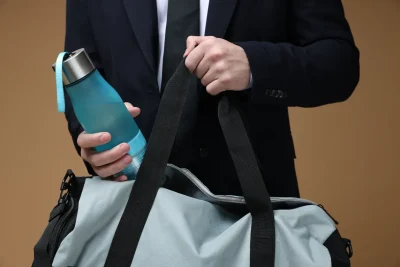
Dry cabin air and long drives make it easy to fall behind on fluids. Carry a water bottle and sip all day.
Protein snacks keep you from grabbing whatever the terminal sells. String cheese, hard-boiled eggs, and protein bars travel well. Ask your bariatric nutritionist what fits your stage of recovery.
Long car rides need a plan, too. Anyone traveling more than four hours by car can be at risk for clots. A beach drive to Destin or Gulf Shores can take five hours or more, so stop every one to two hours to walk and stretch.
Heading abroad? The CDC says to keep medications in their original labeled containers and in your carry-on. Ask Dr. Long’s team for a letter listing each medication and dose, and check the rules at your destination and any layover. Stick to bottled water where tap water isn’t safe, since a stomach bug can dehydrate you fast.
Eating Out and Trying New Foods After Bariatric Surgery
Eating out after bariatric surgery gets easier with a little planning. Wait until you’re on regular foods first. We suggest about four to six weeks, and BMI schedules a nutritionist follow-up at four weeks, so that visit is a good time to ask about restaurants.
A few habits make any menu easier:
- Look at the menu online before you go
- Order lean protein and vegetables, steamed instead of cooked in butter
- Ask for a box when you order, and put half your plate in it right away
- Stop at the first sign of fullness
Southern menus come with traps. Fried plates, sweet tea, and sugary sauces can trigger dumping syndrome, which brings cramps, nausea, and diarrhea. A sleeve leaves the pylorus intact, which helps prevent dumping, but gastric bypass patients need to be extra careful.
Can I still try new foods on vacation?
Yes, once your surgeon clears regular foods. Share dishes, order a taste instead of an entree, and chew slowly. If something doesn’t sit well, you’ll know for next time.

Alcohol After Gastric Sleeve and Bypass: What to Know
Alcohol works differently after surgery. Gastric bypass speeds absorption, raises peak alcohol levels, and takes longer to clear. A recent International Journal of Obesity study tested alcohol before and after surgery and found that uptake roughly doubled after both bypass and sleeve. Peak blood alcohol arrived in about half the time. A drink that felt fine before surgery can hit much harder now.
Dr. Long’s team prefers that patients skip alcohol after surgery, and advises avoiding it for the first year. A zero-sugar mocktail keeps you in the toast.
Your Next Trip Is Still on the Calendar
Surgery changes how you travel, but it doesn’t end the trip altogether. With a clearance date, a properly packed carry-on, and a plan for meals and drinks, most patients get back to the vacations they love in no time.
FAQs About Traveling After Gastric Sleeve or Bypass
What is the gastric sleeve recovery timeline?
The gastric sleeve recovery timeline at BMI starts with an overnight stay. Most patients return to work in about a week, skip lifting over 10 pounds for four weeks, and start low-impact exercise after one week. At four weeks, you can exercise without limits. Bypass patients usually go home on day two. Flying depends on your surgeon’s clearance.
Is it safe to eat out a few weeks after gastric bypass?
We advise waiting about four to six weeks to eat out, once you’re on regular foods. Start with small portions of lean protein and vegetables, and check with your bariatric team first.
Can I have a drink on vacation after gastric sleeve?
Dr. Long’s team prefers that patients skip alcohol after surgery. Your body also absorbs it faster, so one drink can hit harder than you expect. Ask your team about your situation before your first drink.
Talk With Dr. Long About Life After Surgery
If worries about travel, restaurants, or missing out are holding you back from surgery, let’s talk them through. Dr. Jay C. Long and the team at Birmingham Minimally Invasive Surgery will explain what recovery looks like and when you can get back to the things you love. BMI Priority Pass also offers a consultation and surgery within two days.
Call us at (205) 833-6907, schedule online, or visit our contact page to get started.